

Positive Emotion: Why Joy Matters at Every Age

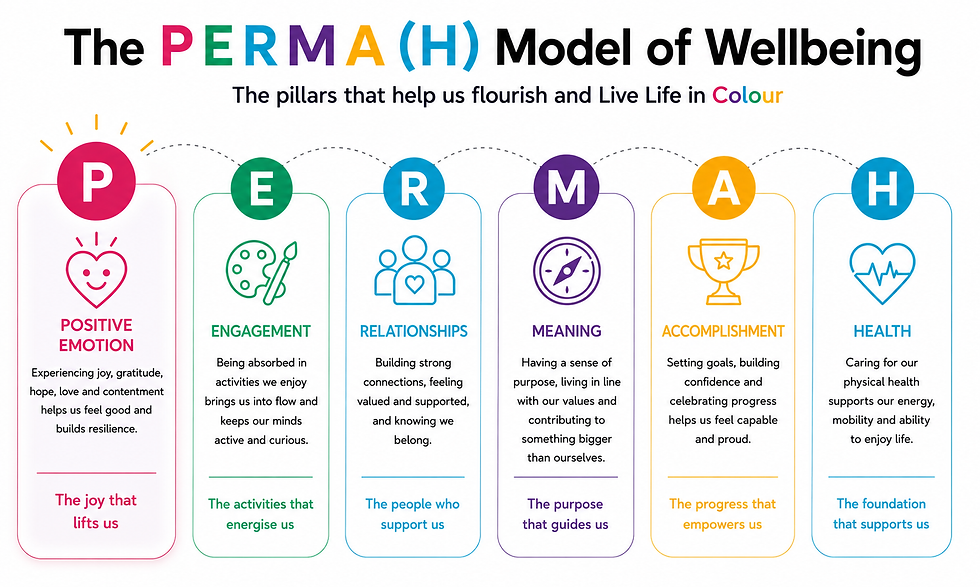
This article is the first in our series exploring the pillars that help people flourish. Our approach draws on the PERMA model developed by Professor Martin Seligman, a leading psychologist at the University of Pennsylvania and former President of the American Psychological Association.
Introduction
When we think about support in later life, conversations often focus on practical needs.
Is Mum eating enough? Has Dad remembered his medication? Is the house safe?
Can they still manage the stairs?
These questions are important. Safety, health and support all play a vital role in helping people live well as they age. However, there is another question that deserves just as much attention:
"What makes this person smile?"
The answer will be different for everyone. It might be spending time with family, listening to favourite music, watching a beloved television programme, seeing garden roses bloom, stroking a pet, or simply sharing a laugh over a cup of tea.
These moments may seem small, but they can have a profound impact on wellbeing.
Within Martin Seligman's PERMA model of wellbeing, Positive Emotion is the first of the five pillars that help people flourish. Positive emotions include joy, gratitude, hope, contentment, amusement, pride and love. They are the feelings that make life enjoyable and help us feel connected to the world around us.
At Thrive Homecare, we believe wellbeing is about much more than meeting practical needs. It is about helping people continue to experience the moments that bring happiness, comfort and fulfilment. Because a life that contains joy is a life that feels richer, more meaningful and more colourful.
What Is Positive Emotion?
Positive Emotion is often misunderstood. Many people assume it simply means being happy all the time. In reality, positive psychology does not suggest that we should ignore difficult emotions or pretend that life is always easy.
Sadness, frustration, anxiety and grief are all natural parts of being human. They are particularly common during later life when people may experience health challenges, bereavement, changes in independence or major life transitions.
Positive Emotion is not about avoiding these experiences.
Instead, it is about ensuring there is still space for moments of joy, gratitude, laughter and hope alongside them.
Psychologist Martin Seligman included Positive Emotion as one of the core pillars of wellbeing because research shows that positive feelings contribute significantly to overall life satisfaction and resilience.
The important thing to remember is that positive emotions do not have to come from extraordinary experiences. More often, they come from everyday moments.
A favourite song on the radio.
A visit from a grandchild.
A funny conversation.
The first signs of spring.
A familiar television programme.
The smell of fresh coffee.
These experiences can seem simple, yet they often have the greatest impact.
Why Positive Emotion Matters
Positive emotions do more than simply make us feel good in the moment.
Psychologist Barbara Fredrickson developed what is known as the "Broaden and Build Theory", which suggests that positive emotions help broaden our perspective and build psychological resources over time. In other words, positive emotions help us cope better with life's challenges.
People who regularly experience positive emotions are more likely to:
Build strong relationships
Develop resilience
Feel optimistic about the future
Recover from setbacks more effectively
Experience greater life satisfaction
Maintain emotional wellbeing
Positive emotions can act as a buffer during difficult times.
This does not mean they remove challenges altogether. Rather, they help people navigate those challenges with greater strength and confidence.
Think about the difference a good laugh can make on a difficult day.
The problem may still exist, but for a moment the burden feels lighter.
Over time, these positive experiences accumulate and contribute to overall wellbeing.
Why Joy Becomes So Important in Later Life
As we age, life inevitably changes. Retirement may bring freedom, but it can also bring changes to routine and identity.
Children and grandchildren may live further away.
Health conditions may limit activities that were once enjoyed.
Friends and partners may pass away.
Mobility challenges can make socialising more difficult.
For some people, their world gradually becomes smaller.
Without realising it, opportunities for positive experiences can become fewer and further between.
This is one reason why Positive Emotion is so important in later life.
While we cannot always change someone's circumstances, we can help create opportunities for moments of joy and connection.
These moments remind us that life still contains pleasure, beauty and enjoyment.
Research consistently shows that wellbeing is influenced not only by what people can do, but by how they feel.
A person may have all their practical needs met, yet still experience poor wellbeing if life lacks enjoyment, connection or purpose. True wellbeing requires both.
What Brings Positive Emotion?
The answer is deeply personal. What brings joy to one person may mean very little to another. This is why getting to know the individual is so important.
At Thrive Homecare, we take time to understand each person's story, interests, preferences and personality.
We want to know:
What makes them smile?
What are they passionate about?
What memories do they enjoy talking about?
What activities have always been important to them?
What gives them comfort or makes them feel content?
These answers help us create opportunities for meaningful experiences.
Some common sources of positive emotion include:
Music
A familiar song can transport someone back to a treasured memory, spark conversation or simply brighten their mood. For people living with dementia, music can remain meaningful even when other forms of communication become more difficult. Music based activities often create moments of joy, connection and reminiscence.
Pets and Animals
Many people experience comfort, companionship and happiness through interactions with animals. Whether it is spending time with a beloved pet, watching birds in the garden or sharing stories about animals they have loved throughout their lives, these experiences can provide significant emotional benefits.
Nature
Nature offers countless opportunities for positive emotion. A walk in the fresh air. Watching birds at a feeder. Enjoying flowers in bloom. Feeling sunshine on your face. Research has shown that spending time in nature can improve mood and reduce stress, making it an important contributor to wellbeing.
Laughter and Humour
Laughter remains one of the most powerful sources of positive emotion. A funny story, a favourite comedy programme or a shared joke can transform the atmosphere of a day. Humour helps people feel connected and reminds us not to take life too seriously.
Reminiscence
Looking through old photographs, discussing holidays, sharing family stories and reflecting on life experiences can bring immense pleasure. Reminiscence not only creates positive emotions but also helps reinforce identity and self-esteem.
Relationships
Many of life's happiest moments involve other people. Whether it is spending time with family, enjoying companionship, talking with neighbours or participating in community activities, relationships remain one of the strongest sources of positive emotion throughout life.
How Thrive Supports Positive Emotion
At Thrive Homecare, we believe support should be about more than completing tasks.
Of course, practical support is important. But wellbeing comes from understanding the whole person and helping them continue to enjoy the things that matter most to them.
This starts with relationships.
By taking the time to build genuine connections, our Health & Wellbeing Associates learn what brings joy, comfort and meaning to each individual.
Sometimes that means supporting someone to continue a favourite hobby.
Sometimes it means encouraging a trip to a cherished location.
Sometimes it means sitting together and looking through family photographs.
Sometimes it is simply sharing a conversation and a laugh.
These moments may appear small from the outside, but they often have a significant impact on wellbeing. We often find that attention to the small details makes the biggest difference.
A Real Example
Although her physical care needs were being met, something was missing in Dorothy’s life; she had lost her sparkle. So, we peeled back the layers and got to know her. When we discovered she was a lifelong fan of Cliff Richard, we arranged for her to receive a personalised card from him. This small but thoughtful gesture created a moment of pure delight, lifting her spirits and providing a sense of connection and joy that she carried with her long after receiving it.
When people continue to experience joy, connection and positive emotion, life feels fuller and more rewarding.

Supporting Positive Emotion as a Family
Families play a vital role in helping older relatives experience positive emotions.
Often, the simplest gestures are the most meaningful.
You might:
Listen to favourite music together
Look through family photographs
Watch a favourite television programme
Spend time outdoors
Celebrate birthdays and milestones
Encourage hobbies and interests
Share stories and memories
Involve grandchildren in visits
Create opportunities for laughter and connection
The goal is not to fill every moment with activity. Instead, it is to create opportunities for meaningful experiences that bring enjoyment and connection.
Living Life In Colour
Positive Emotion is not about being happy all the time. It is about ensuring life continues to contain moments of joy, gratitude, hope and connection, even during difficult periods.
At Thrive Homecare, we believe support should help people do more than simply manage day to day life. It should help people continue to experience the things that make life enjoyable and uniquely their own.
Because wellbeing is not just about adding years to life. It is also about adding life to those years. And that is what it means to Live Life In Colour.
Explore the rest of the PERMA(H) pillars:
If you would like to learn more about our companionship, visiting care, live-in care or dementia support services, contact us today for a no obligation chat.


Comments